
SPECstorage™ Solution 2020_eda_blended Result
Copyright © 2016-2026 Standard Performance Evaluation Corporation
|
SPECstorage™ Solution 2020_eda_blended ResultCopyright © 2016-2026 Standard Performance Evaluation Corporation |
| Microsoft and NetApp Inc. | SPECstorage Solution 2020_eda_blended = 17280 Job_Sets |
|---|---|
| Azure NetApp Files large volume breakthrough mode scale | Overall Response Time = 0.60 msec |
|
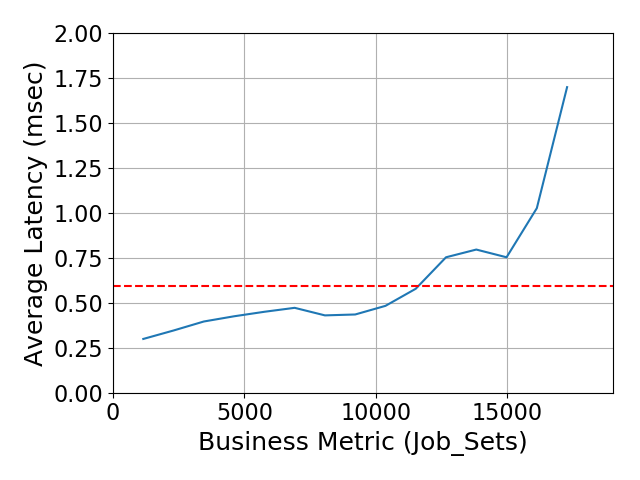
|
| Azure NetApp Files large volume breakthrough mode scale | |
|---|---|
| Tested by | Microsoft and NetApp Inc. | Hardware Available | May 2024 | Software Available | May 2024 | Date Tested | January 2026 | License Number | 33 | Licensee Locations | San Jose, CA USA |
Azure NetApp Files is an Azure native, first-party, enterprise-class, high-performance file storage service. It provides Volumes as a service, which you can create within a NetApp account and a capacity pool, and share to clients using SMB and NFS. You can also select service and performance levels and manage data protection. You can create and manage high-performance, highly available, and scalable file shares by using the same protocols and tools that you're familiar with and rely on on-premises.
| Item No | Qty | Type | Vendor | Model/Name | Description |
|---|---|---|---|---|---|
| 1 | 6 | Storage Service | Microsoft | Azure NetApp Files large volume breakthrough mode | Azure NetApp Files large volumes can support from 50 TiB to 2 PiB in size. Breakthrough mode enables individual volumes to scale beyond 12.5 GiB/s. Volumes can be resized up or down on demand, and throughput can be adjusted automatically (based on volume size) or manually depending on the capacity pool QoS type. |
| 2 | 108 | Azure Virtual Machine | Microsoft | Standard_D16_v5 | (Workload clients) Red Hat Enterprise Linux running on Azure D16s_v5 Virtual Machines (16 vCPU, 64 GB Memory, 12.5 Gbps Networking). The Dsv5-series virtual machines offer a combination of vCPUs and memory to meet the requirements associated with most enterprise workloads |
| 3 | 1 | Azure Virtual Machine | Microsoft | Standard_D2_v5 | (Prime Client) Red Hat Enterprise Linux running on Azure D2s_v5 Virtual Machines (2 vCPU, 8 GB Memory, 12.5 Gbps Networking). |
| Item No | Component | Type | Name and Version | Description |
|---|---|---|---|---|
| 1 | RHEL 9.5 | Operating System | RHEL 9.5 (Kernel 5.14.0-503.38.1.el9_5.x86_64) | Operating System (OS) for the workload clients |
| Client Network Settings | Parameter Name | Value | Description |
|---|---|---|
| Accelerated Networking | Enabled | Accelerated Networking enables single root I/O virtualization (SR-IOV) on supported virtual machine (VM) types | Storage Network Settings | Parameter Name | Value | Description |
| Network features | Standard | Standard Network Features allows Azure VNet features such as network security groups, user-defined routes and others. |
None
| Clients | Parameter Name | Value | Description |
|---|---|---|
| rsize,wsize | 262144 | NFS mount options for data block size |
| protocol | tcp | NFS mount options for protocol |
| nfsvers | 3 | NFS mount options for NFS version |
| nconnect | 8 | NFS mount options for multiple TCP connections |
| actimeo | 600 | NFS mount option to modify the timeouts for attribute caching |
| nocto | present (boolean) | NFS mount option to turn off close-to-open consistency |
| noatime | present (boolean) | NFS mount option to turn off access time updates |
| nofile | 102400 | Maximum number of open files per user |
| nproc | 10240 | Maximum number of processes per user |
| sunrpc.tcp_slot_table_entries | 128 | Sets the number of (TCP) RPC entries to pre-allocate for in-flight RPC requests |
| net.core.wmem_max | 16777216 | Maximum size of the socket send buffer |
| net.core.rmem_max | 16777216 | Maximum size of the socket receive buffer |
| net.core.wmem_default | 1048576 | Default setting in bytes of the socket send buffer |
| net.core.rmem_default | 1048576 | Default setting in bytes of the socket receive buffer |
| net.ipv4.tcp_rmem | 1048576 8388608 33554432 | Minimum, default and maximum size of the TCP receive buffer |
| net.ipv4.tcp_wmem | 1048576 8388608 33554432 | Minimum, default and maximum size of the TCP send buffer |
| net.core.optmem_max | 4194304 | Maximum ancillary buffer size allowed per socket |
| net.core.somaxconn | 65535 | Maximum tcp backlog an application can request |
| net.ipv4.tcp_mem | 4096 89600 8388608 | Maximum memory in 4096-byte pages across all TCP applications. Contains minimum, pressure and maximum. |
| net.ipv4.tcp_window_scaling | 1 | Enable TCP window scaling |
| net.ipv4.tcp_timestamps | 0 | Turn off timestamps to reduce performance spikes related to timestamp generation |
| net.ipv4.tcp_no_metrics_save | 1 | Prevent TCP from caching connection metrics on closing connections |
| net.ipv4.route.flush | 1 | Flush the routing cache |
| net.ipv4.tcp_low_latency | 1 | Allows TCP to make decisions to prefer lower latency instead of maximizing network throughput |
| net.ipv4.ip_local_port_range | 1024 65000 | Defines the local port range that is used by TCP and UDP traffic to choose the local port. |
| net.ipv4.tcp_slow_start_after_idle | 0 | Congestion window will not be timed out after an idle period |
| net.core.netdev_max_backlog | 300000 | Sets maximum number of packets, queued on the input side, when the interface receives packets faster than kernel can process |
| net.ipv4.tcp_sack | 0 | Disable TCP selective acknowledgements |
| net.ipv4.tcp_dsack | 0 | Disable duplicate SACKs |
| net.ipv4.tcp_fack | 0 | Disable forward acknowledgement |
| vm.dirty_expire_centisecs | 30000 | Defines when dirty data is old enough to be eligible for writeout by the kernel flusher threads. Unit is 100ths of a second. |
| vm.dirty_writeback_centisecs | 30000 | Defines a time interval between periodic wake-ups of the kernel threads responsible for writing dirty data to hard-disk. Unit is 100ths of a second. |
Tuned the necessary client parameters as shown above, for communication between clients and storage over Azure Virtual Networking, to optimize data transfer and minimize overhead.
| Item No | Description | Data Protection | Stable Storage | Qty |
|---|---|---|---|---|
| 1 | Azure NetApp Files large volume, Flexible Service Level, 50 TiB, 21504 MiB/s | Azure NetApp Files Flexible, Standard, Premium and Ultra service levels are built on a fault-tolerant bare-metal fleet powered by ONTAP, delivering enterprise-grade resilience, and uses RAID-DP (Double Parity RAID) to safeguard data against disk failures. This mechanism distributes parity across multiple disks, enabling seamless data recovery even if two disks fail simultaneously. RAID-DP has a long-standing presence in the enterprise storage industry and is recognized for its proven reliability and fault tolerance. | Stable Storage | 6 |
| Number of Filesystems | 6 | Total Capacity | 300 TiB | Filesystem Type | Azure NetApp Files large volume breakthrough mode |
|---|
Large volumes were created via the public Azure API using the azure cli tool.
Creation commands are available here: https://learn.microsoft.com/en-us/cli/azure/netappfiles/volume?view=azure-cli-latest#az-netappfiles-volume-create
Creating the Azure NetApp Files Account: az netappfiles account create
--account-name [account-name] --resource-group [resource-group] --location
[location]
Creating the Azure NetApp Files Capacity Pool:
az netappfiles pool create --account-name [account-name] --resource-group
[resource-group] --location [location] --pool-name [pool-name] --service-level
Flexible --size 54975581388800 --CustomThroughputMibps 21504
Creating the Azure NetApp Files Volume: az netappfiles volume create
--resource-group [resource-group] --account-name [account-name] --location
[location] --pool-name [pool-name] --name [volume-name] --usage-threshold 51200
--file-path [mount-point] --protocol-types NFSv3 --vnet [vnet-id] --zones 1
--throughput-mibps 21504 --breakthrough-mode true
n/a
| Item No | Transport Type | Number of Ports Used | Notes |
|---|---|---|---|
| 1 | 12.5 Gbps Virtual NIC | 108 | Each Workload Linux Virtual Machine has a single Network Adapter with Accelerated Networking enabled. |
| 2 | 12.5 Gbps Virtual NIC | 1 | The Prime client has a single Network Adapter with Accelerated Networking enabled. |
Azure Virtual machines allocated bandwidth limits egress (outbound) traffic from the virtual machines. The virtual machines ingress bandwidth rates may exceed 12.5 Gbps depending on other resources available to the virtual machine (https://learn.microsoft.com/en-us/azure/virtual-network/virtual-machine-network-throughput)
| Item No | Switch Name | Switch Type | Total Port Count | Used Port Count | Notes |
|---|---|---|---|---|---|
| 1 | Azure Virtual Network - Brazil South | Virtual Network | 24 | 24 | Each Azure virtual network had 6 connection for the Azure NetApp Files storage endpoints and 18 (1 per) RHEL client. Azure virtual networks allow up to 65,536 Network interface cards and Private IP addresses per virtual network. This Azure VNet was Peered to the VNet in Canada Central. |
| 2 | Azure Virtual Network - Southeast Asia | Virtual Network | 24 | 24 | This Azure VNet was Peered to the VNet in Canada Central. |
| 3 | Azure Virtual Network - West Europe | Virtual Network | 24 | 24 | This Azure VNet was Peered to the VNet in Canada Central. |
| 4 | Azure Virtual Network - West US | Virtual Network | 24 | 24 | This Azure VNet was Peered to the VNet in Canada Central. |
| 5 | Azure Virtual Network - West US3 | Virtual Network | 24 | 24 | This Azure VNet was Peered to the VNet in Canada Central. |
| 6 | Azure Virtual Network - Germany West Central | Virtual Network | 24 | 24 | This Azure VNet was Peered to the VNet in Canada Central. |
| 7 | Azure Virtual Network - Canada Central | Virtual Network | 1 | 1 | This Azure VNet was Peered to all other VNets to allow Prime client communication between itself and the workload clients |
| Item No | Qty | Type | Location | Description | Processing Function |
|---|---|---|---|---|---|
| 1 | 1728 | vCPU | Azure Cloud | Intel(R) Xeon(R) Platinum 8370C CPU @ 2.80GHz (16 cores allocated to each Workload VM) | Client Workload Generator |
| 2 | 2 | vCPU | Azure Cloud | Intel(R) Xeon(R) Platinum 8370C CPU @ 2.80GHz (2 cores allocated to Prime VM) | Prime Client |
n/a
| Description | Size in GiB | Number of Instances | Nonvolatile | Total GiB |
|---|---|---|---|---|
| Client Workload Generator | 64 | 108 | V | 6912 |
| Prime Client | 8 | 1 | V | 8 | Grand Total Memory Gibibytes | 6920 |
None
Azure NetApp Files utilizes non-volatile battery-backed memory of two independent nodes as write caching prior to write acknowledgement. This protects the filesystem from any single-point-of-failure until the data is de-staged to disks. In the event of an abrupt failure, pending data in the non-volatile battery-backed memory is replayed to disk upon restoration.
Clients each accessed one storage endpoint (They were round robin assigned to
one of the six endpoints) for the Azure NetApp Files large volume within the
same availability zone/virtual network.
Unlike a general-purpose
operating system, Azure NetApp Files does not provide mechanisms for customers
to run third-party code (https://learn.microsoft.com/en-us/security/benchmark/azure/baselines/azure-netapp-files-security-baseline?toc=/azure/azure-netapp-files/TOC.json#security-profile).
Azure Resource Manager allows only an allow-listed set of operations to be
executed via the Azure APIs (https://learn.microsoft.com/en-us/azure/azure-netapp-files/control-plane-security).
Underlying Azure infrastructure was patched for Spectre/Meltdown on or prior
to January 2018. (https://azure.microsoft.com/en-us/blog/securing-azure-customers-from-cpu-vulnerability/
and https://learn.microsoft.com/en-us/azure/virtual-machines/mitigate-se).
None
108 clients were used to generate the workload with 1 client in Canada Central
was the Prime client. There is 18 workload clients for each of the 6 different
regions as follows:
Each of the six filesystems are independent; they are not a single distributed
filesystem across regions.
There is 1 mount per client
each to /mnt/eda. Each region's clients statically mounted a filesystem locally
within the region to the same local path. Example mount commands from one
server in each region are shown below. /etc/fstab entry:
[Southeast
Asia] 10.254.171.4:/southeast-asia-vol /mnt/eda nfs
hard,proto=tcp,vers=3,rsize=262144,wsize=262144,nconnect=8,nocto,noatime,actimeo=600
0 0
[Brazil South]
10.254.161.4:/south-brazil-vol /mnt/eda nfs
hard,proto=tcp,vers=3,rsize=262144,wsize=262144,nconnect=8,nocto,noatime,actimeo=600
0 0
[West Europe]
10.254.151.4:/west-europe-vol /mnt/eda nfs
hard,proto=tcp,vers=3,rsize=262144,wsize=262144,nconnect=8,nocto,noatime,actimeo=600
0 0
[West US] 10.254.141.4:/west-us-vol
/mnt/eda nfs
hard,proto=tcp,vers=3,rsize=262144,wsize=262144,nconnect=8,nocto,noatime,actimeo=600
0 0
[West US3] 10.254.131.4:/west-us3-vol
/mnt/eda nfs
hard,proto=tcp,vers=3,rsize=262144,wsize=262144,nconnect=8,nocto,noatime,actimeo=600
0 0
[Germany West Central]
10.254.121.4:/germany-west-central-vol /mnt/eda nfs
hard,proto=tcp,vers=3,rsize=262144,wsize=262144,nconnect=8,nocto,noatime,actimeo=600
0 0
None
Generated on Mon Mar 23 14:55:06 2026 by SpecReport
Copyright © 2016-2026 Standard Performance Evaluation Corporation
